

Plotter vs Pantser: The Wrong Question Almost Everyone Asks First
TL;DR Picking one approach for the whole book is the mistake. The writers who actually finish decide it layer by layer. Lock down the parts that fall apart without a plan. Leave the parts that go stiff under a plan alone. Your genre has already made half the calls for you anyway. |
The gardener everyone quotes still hasn’t finished his book
You know the George R.R. Martin line. He says he’s a gardener. Plants a seed, waters it, sees what comes up.
It’s a lovely way to talk about writing. It’s also been copy-pasted into basically every article on this subject for fifteen years now.
And nobody ever mentions the part where the garden hasn’t grown anything in over a decade. The Winds of Winter has been “in progress” since 2011. People are still waiting. Some of them have aged out of caring.
I’m not trying to dunk on him. His characters are some of the richest in fantasy, and a big reason for that is he discovers them instead of plotting them out in advance. But look at the trade he’s making. The most famous pantser alive is also the most famous example of a book that just will not arrive.
The method has a cost. The articles quoting him never get around to mentioning it.
So here’s the better question
Forget “which one am I.”
Ask this instead: which parts of this book can I get away with discovering, and which parts will fall over if I don’t plan them?
That one actually has an answer. “What’s my writer personality type” never will. If you’re starting from scratch and need the full framework, the novel planning guide covers every method end to end.
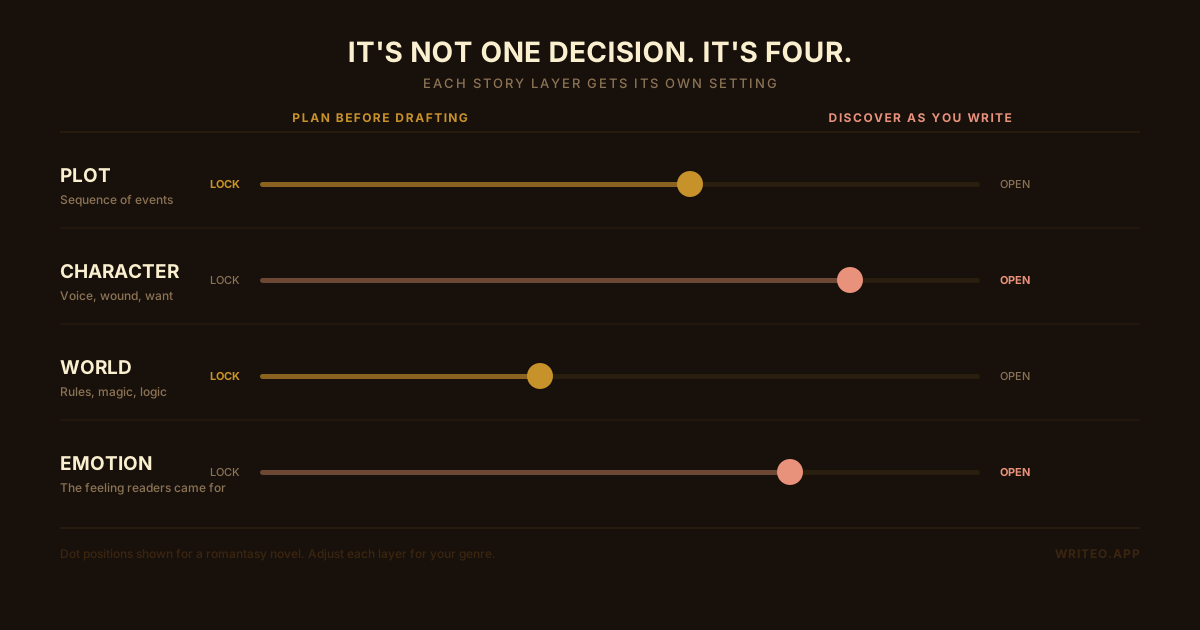
A novel isn’t one decision. It’s four of them.
Think about what’s running at the same time in any book:
Plot: what happens, and in what order
Character: who these people really are
World: the rules everything runs on
Emotion: the inner arc, and in romance, the thing pulling two people together
When you ask “do I outline?” you’re smushing four separate decisions into one. No wonder it feels impossible to answer cleanly.
You don’t have to answer it the same way for all four. The writers who know what they’re doing almost never do.
Sanderson plans the plot and just winds up finding the people
Everyone files Brandon Sanderson under “outliner.” For plot, fair enough. He won’t start drafting until he knows where the thing lands.
But ask him about character and he says the opposite. His actual words:
“When you’re discovery writing, you often have a lot more success creating and discovering characters.”
— Brandon Sanderson, Writing Excuses
He’ll free-write a few opening chapters with no plan at all, just to hear how his people talk.
Same guy. Same book. He plans one layer and pantses the other, and doesn’t think twice about it.
That’s the move. Plotter and pantser were never personalities. They’re settings, and you get one per layer.
Your genre already locked half the choices for you
Once you stop staring at yourself and start looking at the book, your genre starts handing you instructions.
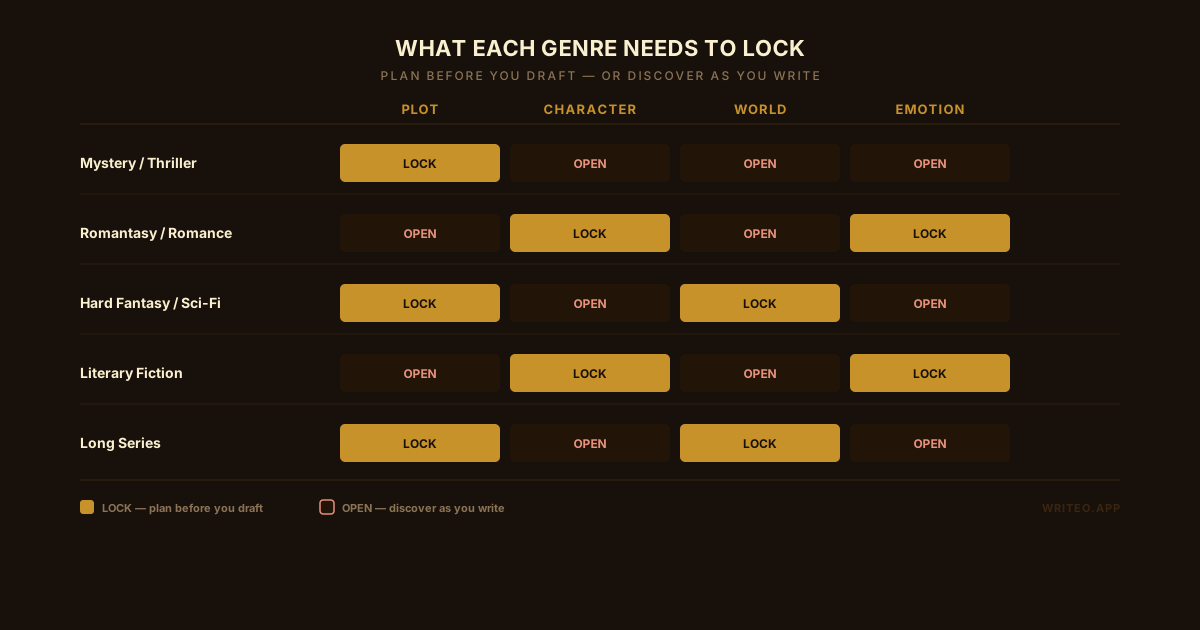
Mystery or thriller? Lock the plot. The whole genre is a promise that the answer was sitting there the entire time, and you cannot keep that promise by winging it.
Hard-magic fantasy? Lock the world. The fastest way to lose a fantasy reader is rules that don’t hold up. Your characters can shock you all they want. Your magic doesn’t get to.
Romantasy or slow burn? This one’s backwards. You protect the romance by leaving it open. Chemistry lives on vulnerability, desire, and resistance, and all three curdle the second a reader catches you hitting a beat because the schedule said so.
Literary fiction? Leave the plot loose on purpose. These books run on noticing things, not on a chain of events. Over-build the structure and you’ll wring the life right out of it.
Long series? Lock the big shape. Not every chapter, but you’d better know the ending before book one casually drops a detail that book five can’t live with.
Sit with the grid a second. Character and emotion stay open almost the whole way down. Plot and world only lock when the genre actually leans on them.
There are exactly two ways this goes wrong
You pantsed something that needed a plan. Hello, sagging middle. Around the fifty-thousand-word mark the whole thing runs out of gas. Clues stop adding up. Fixing it isn’t a polish pass, it’s surgery, because now you’re back-filling a plan you should’ve had on day one.
You planned something that needed to breathe. This one’s sneakier, and worse. The outline is gorgeous and the draft is a corpse. The characters keep doing what the plan tells them instead of what they’d obviously do.
Quick gut check:
Draft feels messy? You under-planned something structural. Draft feels dead? You over-planned something living. |
Messy is a map problem. Dead is a freedom problem. Totally opposite fixes, which is why “just outline more” and “just let it flow” are both useless as blanket advice. One of them is poison for whatever you’re actually dealing with.
How to set the dials in about four questions
Ask these about the book, not about you:
Lock the plot. Does the ending hinge on something planted early?
Lock the world. Does it fall apart if the rules wobble?
Leave the emotion open. Did people come for a feeling more than an event?
Lock the big shape. Is it more than one book?
None of those asked whether outlining is fun for you. That question shows up dead last, and all it does is tune a dial you’ve already placed.
For a full breakdown of specific outline methods, how to outline a novel walks through five approaches with examples. And if you want these four diagnostic questions visible while you draft, Writeo’s Notes panel (Alt+N) keeps them pinned right next to the page without opening a second document.
How WriteO handles the plotter vs pantser problem
A layered plan only helps if you can see every layer while you’re drafting, instead of burying them in five documents you stop opening by week three.
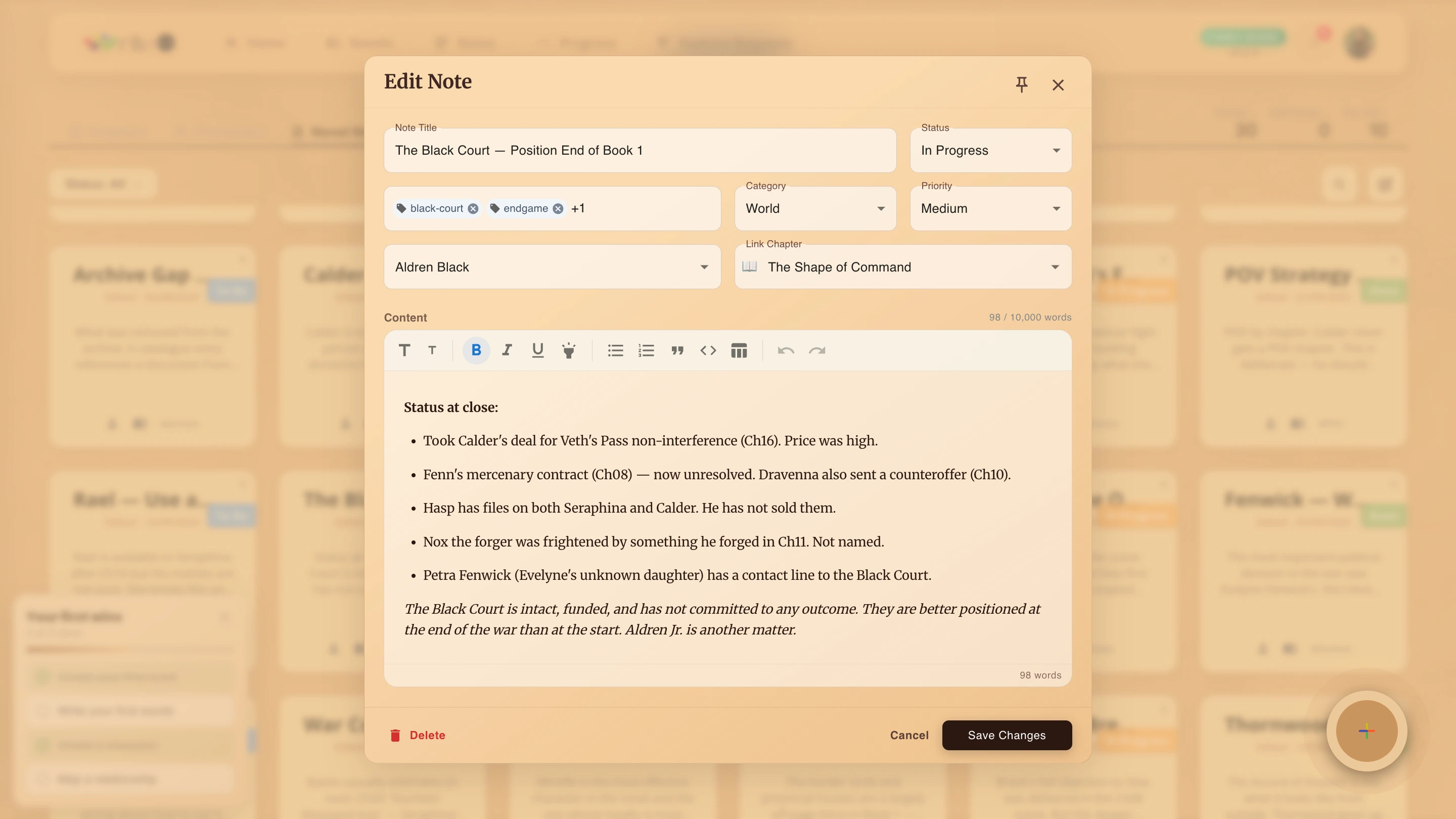
Writeo lets you pin notes to specific chapters right inside the project. Your locked layers sit there as reference: the planted clues, the magic rules, the beats you committed to. That’s your story bible, living next to the draft instead of in a folder you never open. Your open layers sit there too, catching whatever you stumble into as you write. The Notes panel (Alt+N) keeps all of it on the page, so the plan you built and the story you’re finding don’t wander off into separate documents.
Start with the book, not with yourself
Here’s the part that took me too long to learn: the method was never the point. A mystery doesn’t care if you enjoy outlining. A romance can’t feel how disciplined you are.
The book only knows whether you gave it what it needed. So figure out what that is, page by page, and quit worrying about which kind of writer that makes you. Probably both. Most days, both.
Track your novel layer by layer from chapter one to the finale inside WriteO, Free to start, no credit card needed.