

Naming your characters is one of the most crucial parts of the novel-writing process. It shapes how readers perceive them before a single line of dialogue is spoken. Readers won't connect to your characters if you are simply naming your villain "Shadow" without it carrying the weight of who the character actually is. A name should speak for the character before the character ever gets the chance to speak for themselves.
If you've ever searched "how to name fantasy characters" and ended up with a random name generator and nothing else,
Here's a step-by-step system for naming fantasy characters with intention, not guesswork.
Borrow the Rhythm of a Real Language
One of the most effective fantasy naming conventions is borrowing the rhythm of an existing language instead of inventing sounds from nothing. Random letter combinations might look "fantasy enough" on the page, but they rarely feel grounded because there's no real linguistic logic behind them.
Instead, let a real language guide your sound choices:
Arabic: Zahra, Rayyan
Celtic: Maeve, Caelan
This gives you somewhere to begin, rather than pulling ideas out of thin air, and it's the fastest way to make invented names feel like they belong to a real culture.
Give Each Culture Consistent Naming Endings
If your world has multiple kingdoms or peoples, give each one its own naming pattern specifically through consistent suffixes by gender or role. This is one of the most overlooked worldbuilding naming techniques, and it instantly makes a fantasy world feel more cohesive.
For example, for one empire:
Men: -ian, -or, -ius : Cassian, Valerian
Women: -ia, -elle, -ara : Aurelia, Seraphia
Once you've set this pattern, you can take literally any name idea and add the appropriate ending to make it fit your world.
Build From a Small Set of Fictional Roots
You don't need hundreds of invented words to build a believable character naming system. You need a handful of strong roots you can recombine endlessly.
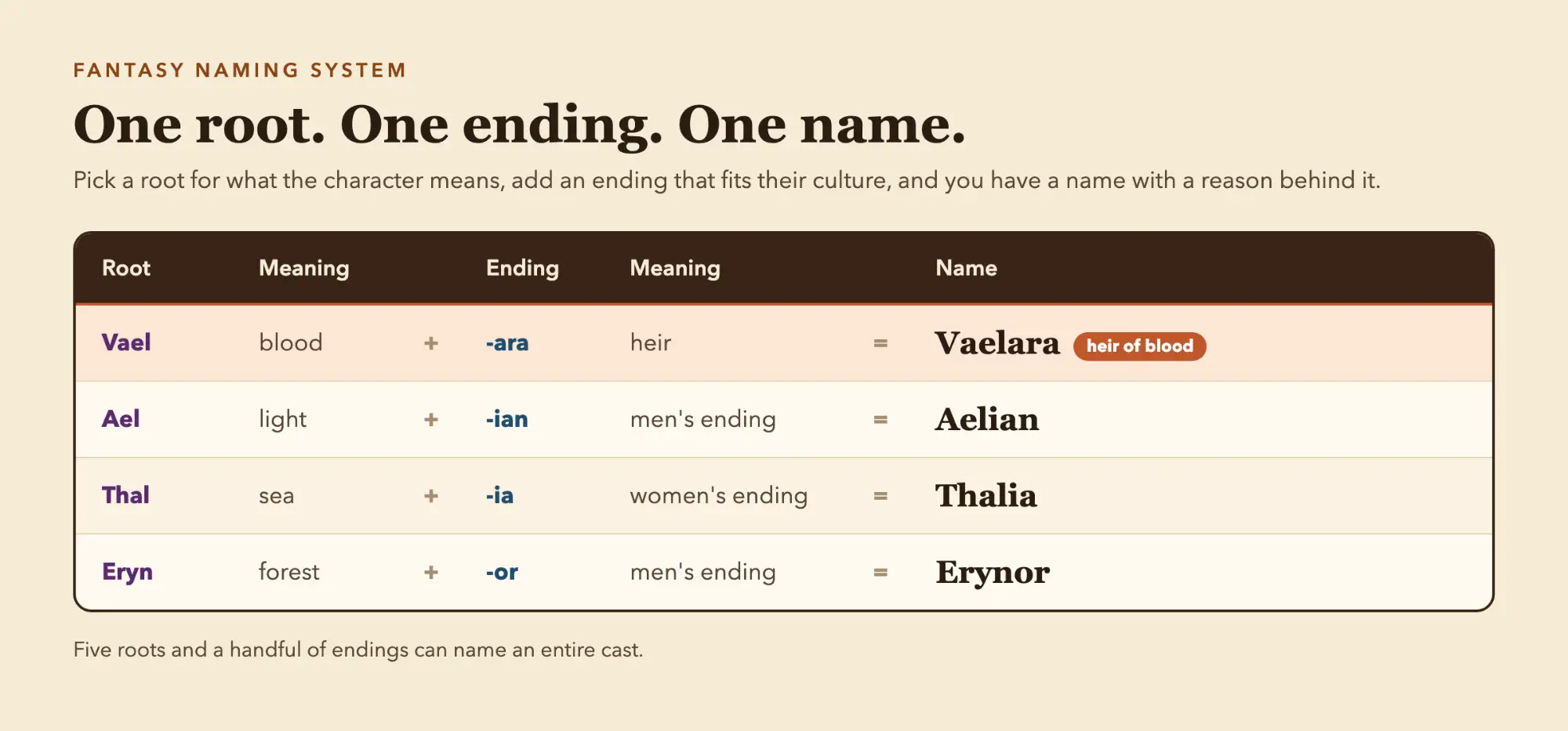
Ael = light
Mor = death
Vael = blood
Eryn = forest
Thal = sea
Five roots. Infinite names. Mix and layer them, and you'll have a naming system that feels consistent across your entire cast without relying on a fantasy name generator that spits out disconnected results.
Use the Evolution Trick
Start with a real name, then mutate it step by step until it feels unique to your world:
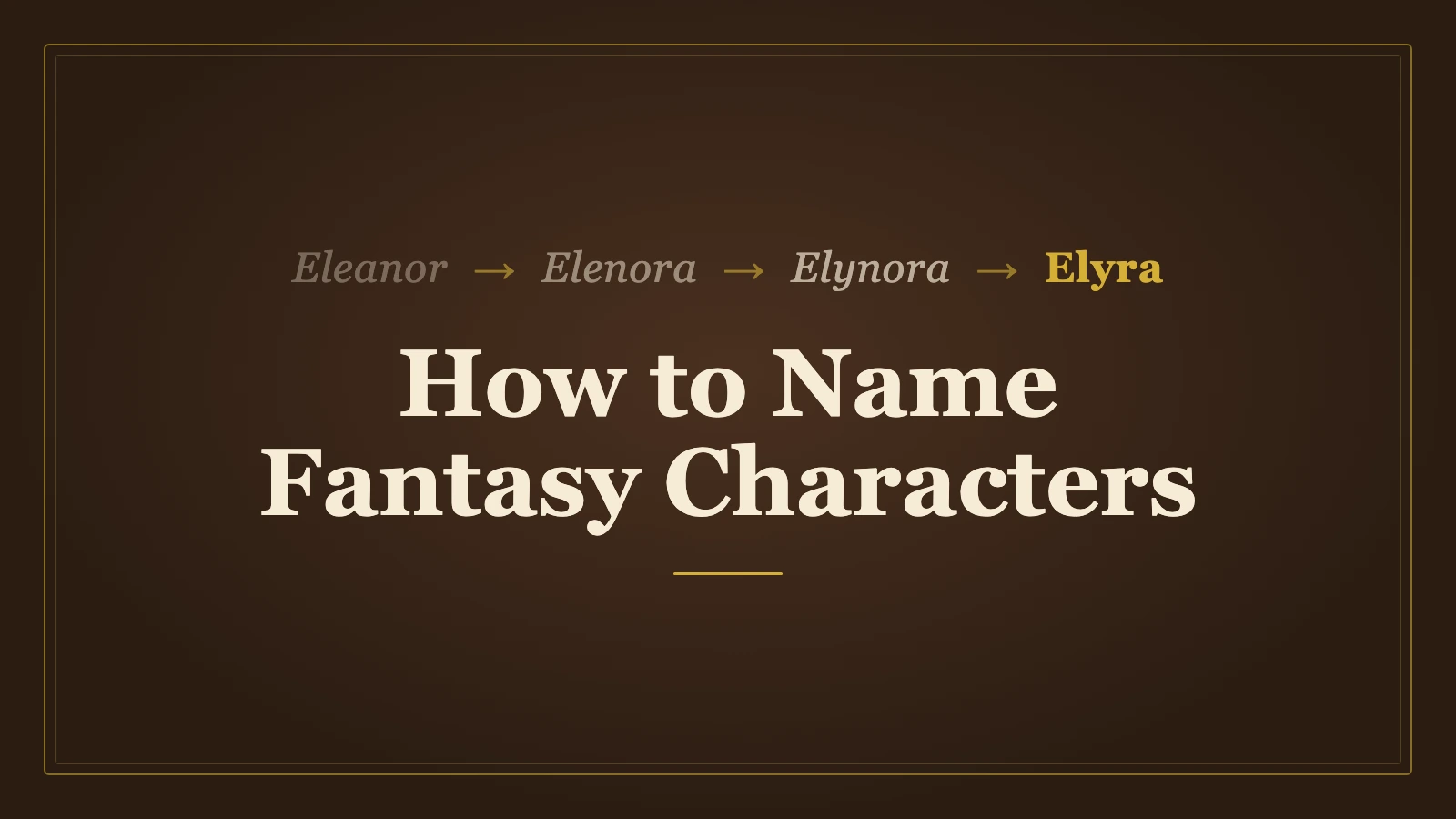
Eleanor → Elenora → Elynora → Elyra
This is one of the fastest ways to get an original-sounding name that still has a real name's bones underneath it. You're already working hard on your plot; your names don't have to be where you get stuck too.
Choose Meaning Over "Sounds Nice"
Don't ask "what sounds pretty?" Ask "what does this character represent?" This is the single biggest shift between amateur and intentional character naming.
Vael = blood
-ara = heir
Vaelara = heir of blood
When you build a name from meaning rather than aesthetics, the name itself starts doing narrative work, hinting at identity, legacy, or fate before the reader even reaches the character's first scene.
Say It Out Loud
If you can't say it, your readers can't either, and a name they can't pronounce is a name they'll skim past instead of connecting with.
Yshtar'kai → Yshtara
A quick read-aloud test will tell you immediately whether a name belongs in your book or needs to be simplified. The goal is for your fantasy names to feel like real words with history behind them, not random letters jumbled together.
Common Naming Mistakes to Avoid
A system only works if it doesn't trip your reader up. These are the four mistakes that undo good names.
Names that look alike. Aria and Arya might feel different to you. To a reader skimming at midnight, they're the same person. Give your main characters different first letters and different lengths.
Apostrophe overload. One apostrophe or a well-placed Y gives a name texture. Three in one name is a speed bump, and readers hate speed bumps.
A meaning you didn't intend. Search every invented name before you fall in love with it. It might already be a real word in another language, or a brand you'd rather not be tied to.
Borrowing without care. If a real culture inspires your names, learn what they actually mean. A name is a piece of someone's heritage, not a costume for your world Borrowing without care. If a real culture inspires your names, learn what they actually mean. A name is a piece of someone's heritage, not a costume for your world.
Quick Naming Checklist
Run every major name through these six questions before it goes anywhere near your manuscript.
Does the name match the sound of its culture?
Does it follow that culture's endings?
Is it built from a root that means something?
Can you say it out loud on the first try?
Does it look different from every other main character's name?
Have you searched it to check for an unwanted meaning?
Keep Every Name Straight in WriteO
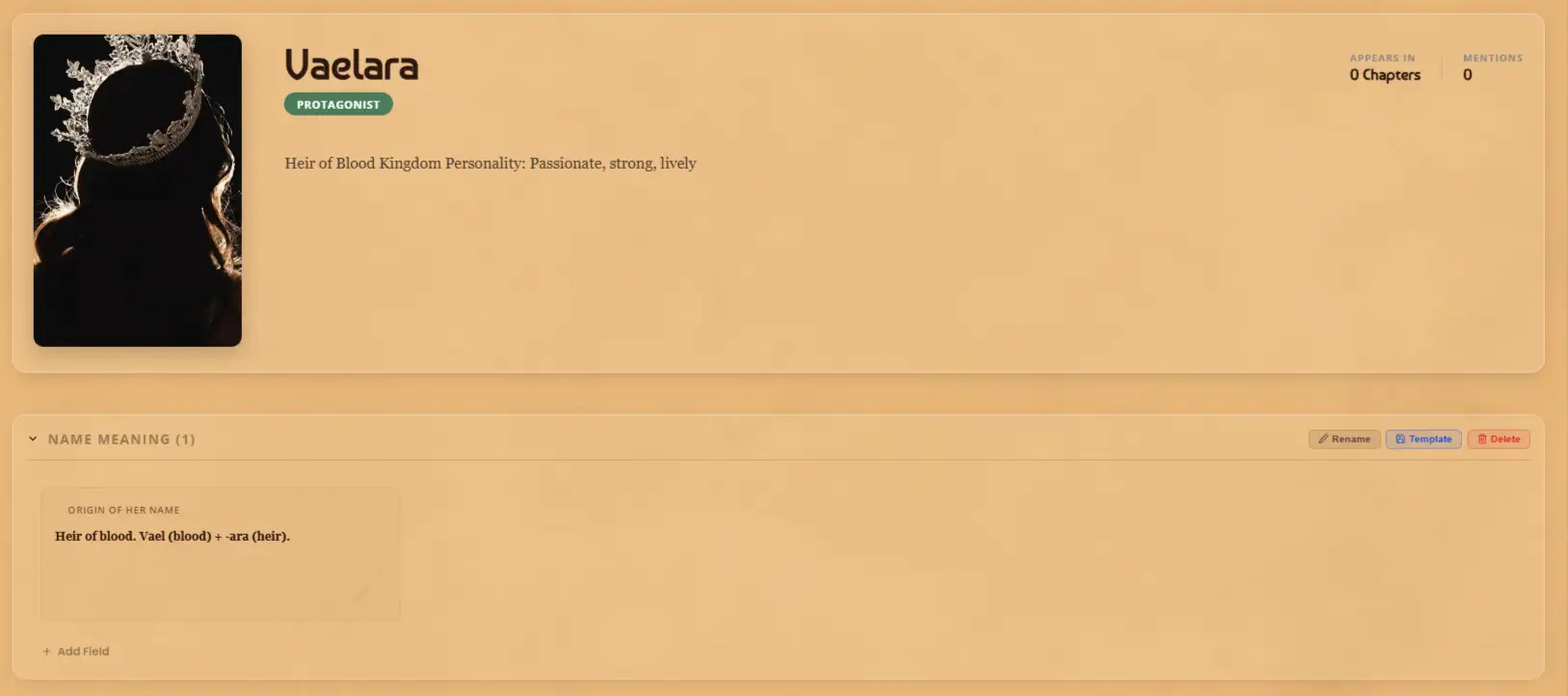
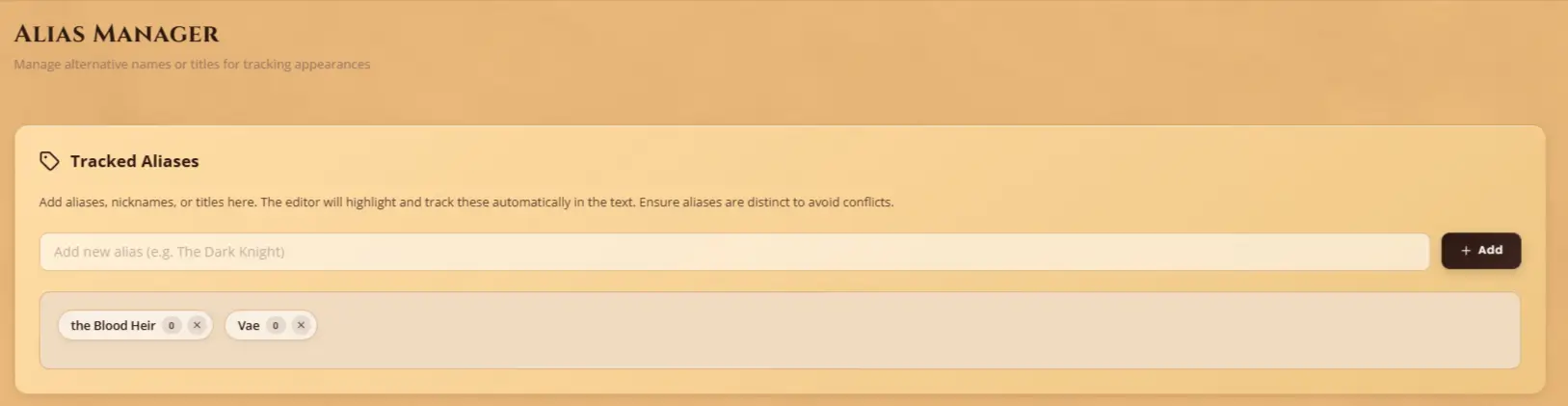
A naming system is only as good as your ability to stick to it, and somewhere around chapter twenty, Elyra quietly becomes Elira. In WriteO, every character gets a profile where you can record what their name means, plus aliases for nicknames and titles. As you write, the editor
highlights each character's name and aliases, so a misspelled name gives itself away: it simply doesn't light up. Keep your roots and endings in a note beside your manuscript, and your whole cast follows the same rules from the first chapter to the last.
The Bottom Line
Great fantasy names aren't random; the good ones follow a system. A language they're inspired by, a handful of recurring roots, endings that shift by gender or class. Once you spot the pattern, you'll start noticing it in every book you love. Use these six fantasy character naming techniques together, and your names will stop sounding "made up" and start sounding inevitable, like they were always meant to belong to the characters wearing them.
Frequently Asked Questions
QHow do you come up with a fantasy character name?
Start with the sound of a real language, pick a root that says something about who the character is, add an ending that fits their culture, then say it out loud. If it survives all four steps, it's a keeper.
QShould fantasy names have meanings?
They don't have to, but the ones that do work harder. Tolkien built his names from the languages he invented, and in Ursula K. Le Guin's Earthsea books, knowing a character's true name gives you power over them.
QAre fantasy name generators bad?
QCan I use real names in a fantasy novel?
Yes, and plenty of fantasy books do. Change a real name one step at a time, like Eleanor to Elyra, and it stays familiar while starting to feel like your world.
QHow do I make sure readers can pronounce my names?
Keep them short, go easy on apostrophes and rare letters, and read every name out loud. If you stumble, your readers will too.